
5 Crucial Things To Know About Hearing Tests
Table of Contents
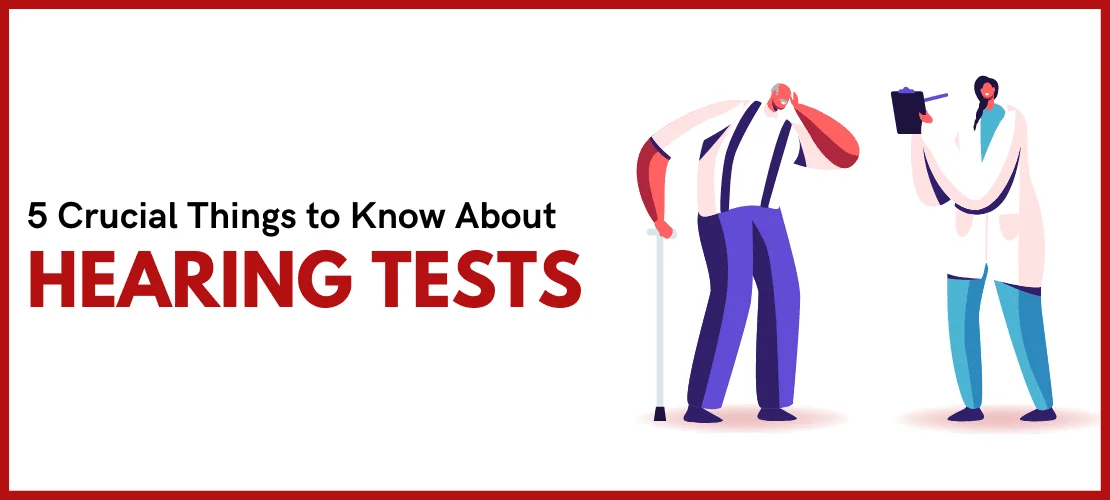
People of all ages tend to suffer from hearing loss at some point of time in their life. For many, trying to recognize the signs can be a complicated task, especially when it occurs gradually. In case, you are unsure about your hearing health, then you should go for a hearing test immediately.
Things To Know On Hearing Tests
- Hearing test types: There are offered different types of hearing tests and screenings. The latter is part of the regular medical exam. They are merely fail-pas challenge to determine hearing loss possibility. In case, you fail this screening test, then you might suffer from hearing loss. Authentic hearing tests help determine hearing ability across diverse tones and frequencies, expressed in hertz and dB (decibels). Standard battery includes:
- Otoacoustic emission testing
- Tympanometry
- Speech discrimination tests
- Pure-tone audiometry
- Signs indicating requiring hearing test: The hospital first tests the baby’s hearing abilities. Schools hold screening tests for children and teenagers. Adults can get hearing test in Mumbai at a reputed hospital. Some indications are:
- Asking others to repeat what they are saying.
- Ears experiencing phantom noise, buzzing or ringing.
- Others finding you to talk extremely loud.
- Difficulty in hearing a conversation with background noise.
- Friends and family members finding radio or television volume to be extremely loud.
- Audiograms: Hearing test results are charted on a paper referred to an audiograms. It appears like a series of dots or lines. However, it states the tones you perceive at a specific frequency. Veridical lines indicate pitch (frequencies) is read left-right and low-high. Horizontal lines indicate intensity and measure in decibels, indicating how soft or loud the sound is. Each ear is separately tested and charted while the audiogram records the results.
- Hearing loss types: If audiogram test results indicate hearing loss issues, then it is likely to be anyone mentioned below:
- Conductive: Although less common, it can be treated easily. It occurs if sound is not able to reach the outer/middle ear because of wax build-up or infection. Hearing gets restored with the removal of blockage.
- Sensorineural: It is quite common and results from overexposure to ototoxic drugs, loud noise or aging. It is permanent and causes damage to hair cells present in the cochlea. You will require using hearing aids to deliver sound into your ear.
- Mixed: It is described commonly as a mixture of both types. There can be certain symptoms associated with both types to be present, besides other causes.
- Hearing loss severity: Hearing tests measured in decibels help determine hearing loss amount.
- Profound (9 dB): You will not hear any sound.
- Severe (6-90 dB): You cannot hear conversational speech.
- Moderately severe (61-75 dB): Quite difficult to hear even ordinary speech.
- Moderate (46-60 dB): Tough to hear conversational speech with background noise.
- Mild (21-45 dB): Finding difficulty distinguishing soft sounds.
If you experience even the slightest hearing issue, you should immediately visit the nearest clinic to get the proper and correct treatment.
FAQs
Different hearing tests assess various aspects of hearing and ear function. Common tests include Pure Tone Audiometry, Speech Discrimination Testing, Tympanometry and Otoacoustic Emissions (OAE) testing. The appropriate tests depend on the individual's hearing concerns and assessment needs.
You may benefit from a hearing test if you frequently ask people to repeat themselves, have difficulty following conversations in background noise, notice ringing or buzzing in your ears, speak louder than usual, or regularly increase the volume of your television or radio.
An audiogram is a visual representation of hearing-test results. It shows the softest sounds you can hear at different frequencies, with frequency measured in hertz (Hz) and sound intensity measured in decibels (dB). Each ear is tested and recorded separately.
A hearing assessment can help identify conductive, sensorineural or mixed hearing loss. Conductive hearing loss involves problems transmitting sound through the outer or middle ear, sensorineural hearing loss involves the inner ear or auditory system, and mixed hearing loss contains features of both.
Hearing tests measure hearing thresholds in decibels to determine the degree of hearing loss. The results can indicate different levels of hearing impairment, ranging from mild to severe or profound, depending on the person's hearing thresholds.
Related Post
-
 How Untreated Hearing Loss Can Affect Your Overall Health: It’s About More Than Just Your Ears
 -
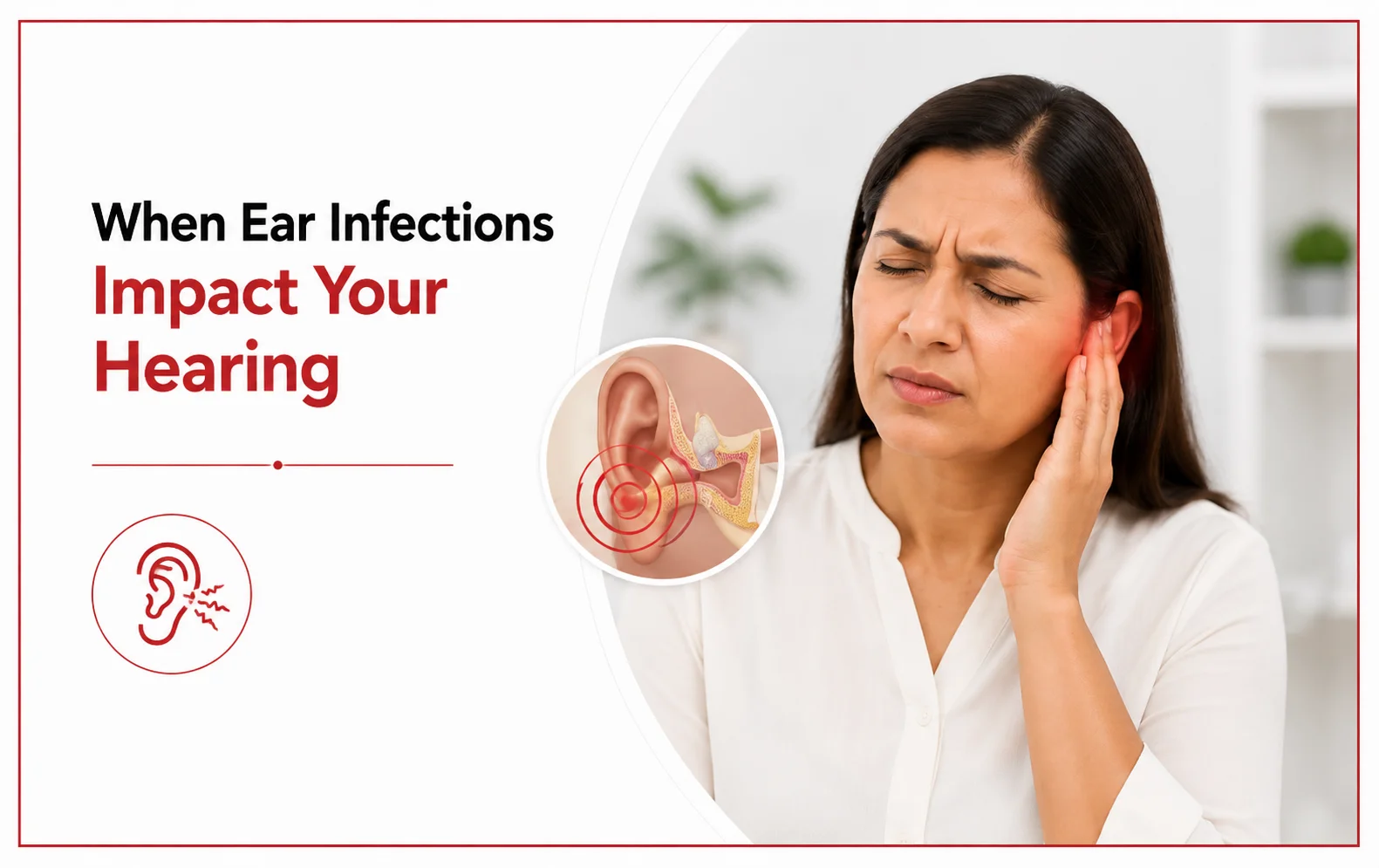 Ear Infection and Hearing Loss: What’s the Connection?
 -
 The Importance of Regular Hearing Check-Ups: Why Every Hearing Test Matters
 -
 Can Hearing Loss Be Reversed? What Patients Need to Know
 -
 Why Can I Hear Sounds But Not Understand Words? Understanding Hidden Hearing Loss
 -
 What's the Difference Between an Audiologist and an ENT?
 -
 6 Diseases That Cause Hearing Loss: Understanding the Connection
 -
 Why a Hearing Test Alone Is Not Enough Before Choosing Hearing Aids
 -
 How Do I Know If My Hearing Aids Are Adjusted Correctly?
 -
 Signia Hearing Aid Price in India (2026)
 -
 Understanding Communication Issues in Elderly Patients: The Distinction Between Hearing and Listening
 -
 Hearing Loss: Types, Symptoms, Causes & Treatment
 -
 Age-Related Hearing Loss (Presbycusis)
 -
 How to Safely and Properly Clean Your Ears- Methods & What to Avoid
 -
 Hearing Aids- Benefits, Different Styles/Types and How They Work
Far far away, behind the word mountains, far from the countries Vokalia and Consonantia, there live the blind texts. Separated they live in Bookmarksgrove right at the coast
Far far away, behind the word mountains, far from the countries Vokalia and Consonantia, there live the blind texts. Separated they live in Bookmarksgrove right at the coast
Far far away, behind the word mountains, far from the countries Vokalia and Consonantia, there live the blind texts. Separated they live in Bookmarksgrove right at the coast
