
Impedance Audiometry Test
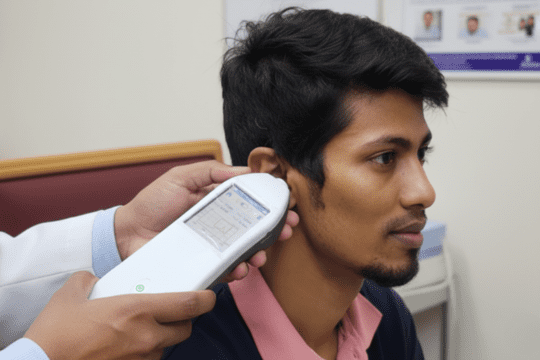
Impedance audiometry procedure is a non-invasive test used to measure the mobility of the eardrum and middle ear system. It evaluates how sound energy passes through the middle ear by checking the resistance (impedance) to sound. The test produces a tympanogram, which indicates if the ear is functioning normally or if there are issues like fluid, perforations, or Eustachian tube dysfunction. This evaluation is critical for identifying middle ear issues like otitis media, otosclerosis, or eardrum perforations. Even though it does not measure hearing sensitivity, it is useful alongside a pure tone audiometry test for a complete hearing assessment.
Who Should Take an Impedance Audiometry Test?
A PTA impedance test is useful for:
Children With Ear Infections
Identifies fluid or pressure issues that cause delays in hearing and speech.

Adults With Blocked Ears
Assesses ear fullness or pressure related to middle ear dysfunction.

Post-Infection Patients
Assesses middle ear status after ear or sinus infections.
People With Tinnitus or Dizziness
Assesses middle ear causes of balance problems, ringing, or dizziness.

Suspected Hearing Loss Patients
Differentiates between sensorineural and conductive hearing loss. This audiometry impedance testing method is especially useful because it is quick, painless, and suitable for all age groups.
Impedance Audiometry Test Procedure: Step-by-Step
The impedance audiometry procedure measures the hearing ability of a person and takes less than 10 minutes. Patients may experience slight changes in pressure during an ear impedance test, but no major discomfort is typically felt. The PTA impedance test procedure is as follows:
Impedance Audiometry Test Types
Three different ear impedance tests are available to assess middle ear function, each of which is represented by specific tympanogram patterns.
Type A Tympanogram
This tympanometry test graph reveals a sharp peak roughly between -150 and +100 daPa with an apex more or less at zero pressure (0 daPa) as well as compliance ranging between 0.2 and 2.5 ml. It demonstrates normal middle ear and tympanic membrane function, indicating that sound transfer is not compromised.
Type B Tympanogram
This is represented by a flat curve with no identifiable peak. This indicates that the tympanic membrane is not moving, which is indicative of middle ear conditions such as ear effusion or a perforated tympanic membrane. Ear canal volume measurements may be used to distinguish between these two disorders, with a higher volume suggestive of a perforation.
Type C Tympanogram
This tympanogram is characterised by a peak shifted to the left in the negative pressure region. It is lower than -100 daPa. This is an indication of middle ear pressure and is often due to a blocked Eustachian tube, sinus blockage, or the healing stage of a middle ear infection.
Understanding Impedance Audiometry Test Results
The results of an impedance audiometry test are shown in a tympanogram graph. Audiologists read and interpret the graph to determine whether the middle ear function is within the normal range or if it needs medical attention. Proper impedance audiometry interpretation is essential for further diagnosis and planning treatment.
Normal Reference Ranges
- Middle Ear Pressure: –100 to +50 daPa
- Eardrum Compliance: 0.3 to 1.5 ml
In addition to the tympanogram, impedance audiometry interpretation also involves assessment of acoustic reflexes. Acoustic reflex testing helps in the earlier identification of otosclerosis and auditory nerve disorders. Results obtained outside the impedance audiometry normal values are likely to represent otitis media, perforations, or chronic Eustachian tube dysfunction, which require further follow-up and treatment.
Impedance Audiometry Test Price
At Quality Hearing Care (QHC), we recognise the importance of making precise diagnosis affordable. In India, the cost of an impedance audiometry test cost varies from clinic to clinic and may increase if other tests are required. At our QHC hearing centres in Mumbai, we provide detailed reports and expert explanations of your results, so that there are no hidden costs to worry about. With certified audiologists and advanced machinery, QHC guarantees reliable impedance audiometry test results at a fair cost.
Book Your Impedance Audiometry Test Today
If you notice signs like your ears feeling blocked, ringing (tinnitus) in your ears, or constant infections, get a middle ear test done. At Quality Hearing Care, our certified audiologists promptly and efficiently conduct painless impedance audiometry tests in our advanced diagnostic facilities, which offer a clearer picture of the middle ear functionality. Schedule an impedance audiometry test near you with QHC for quicker, toll-free impedance audiometry interpretation and treatment.
FAQs
What is the impedance audiometry test used for?
It is used to evaluate middle ear function, detect fluid, perforations, and Eustachian tube problems, and monitor ear health in adults and children.
Is the impedance ear test painful?
No, it is completely safe and painless. Patients may only feel mild pressure in the ear during the procedure.
How long does an impedance audiometry test take?
The audiometry impedance testing procedure takes less than 10 minutes, making it quick and convenient.
Is impedance audiometry useful in children?
Yes, especially for diagnosing fluid buildup, frequent infections, or hearing concerns in children who cannot respond to behavioural hearing tests.
How are impedance audiometry test results interpreted?
Results are plotted as tympanograms. Impedance audiometry type A shows normal function, type B suggests fluid or infection, and type C indicates Eustachian tube dysfunction.
At Quality Hearing Care, we bring change in the way you approach wellness and care.
Copyright © 2026 Quality Hearing Care All rights reserved