
What’s the Difference Between an Audiologist and an ENT?
- Reviewed By: Dr. Prabha
- Published:
Table of Contents
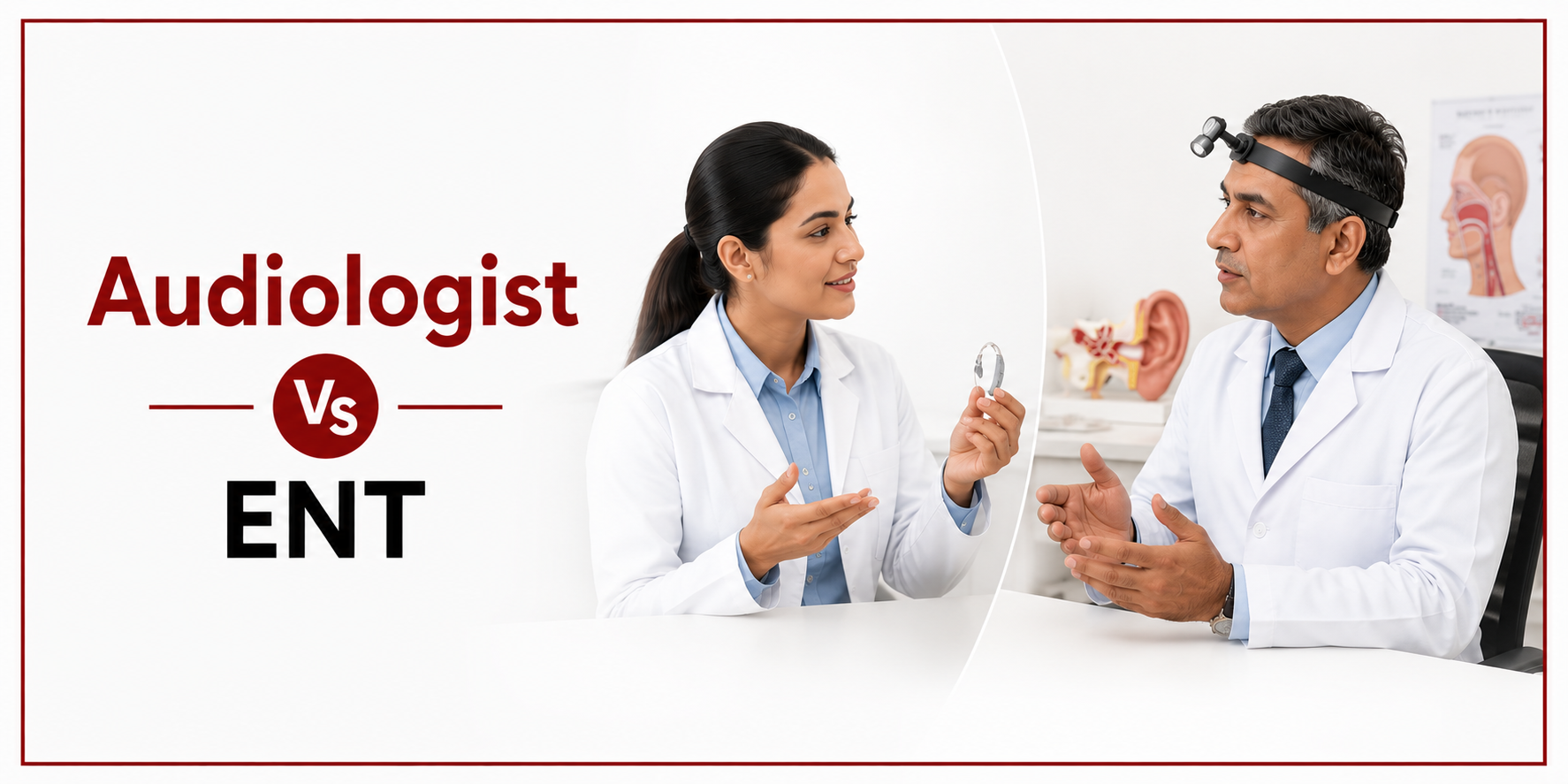
The audiologist vs ENT question comes up often when people first notice hearing problems. Audiologists specialise in hearing assessment and rehabilitation; ENTs are medical doctors who handle surgical and medical conditions of the ear, nose, and throat.
Most people aren’t sure where to turn when they first notice hearing changes. Should you see your GP? An audiologist? An ENT? That uncertainty can delay the care you actually need.
The audiologist vs ENT question has a clear answer once you understand what each professional does. They serve different purposes. For many hearing concerns, knowing which to approach first saves time and leads to better outcomes.
Key takeaways:
- Audiologists assess hearing, fit hearing aids, and manage tinnitus and balance disorders without surgery.
- ENTs are doctors who treat structural and medical ear conditions and can perform surgery when needed.
- For gradual hearing loss or hearing aid needs, an audiologist is usually the right first step.
- The two professions work together; a good audiologist will refer to an ENT when a medical cause is suspected.
Who Is an Audiologist?
An audiologist is a healthcare professional who specialises in hearing and balance disorders. They hold a postgraduate degree in audiology and are trained to assess, diagnose, and manage hearing conditions.
Audiologists conduct comprehensive hearing tests, fit and programme hearing aids, provide tinnitus management, and offer audiological rehabilitation. They also assess balance disorders linked to the inner ear.
What they don’t do is prescribe medication or perform surgery. Their expertise sits firmly in assessment and rehabilitation. At Quality Hearing Care, our specialists are audiologists focused entirely on this work.
Who is an ENT (Ear, Nose, and Throat) doctor?
What is an ENT doctor? An ENT, formally called an otolaryngologist, is a medical doctor. They complete specialist surgical training in conditions affecting the ear, nose, and throat.
ENTs diagnose and treat ear infections, sinusitis, tonsil problems, nasal obstructions, sleep apnoea, and head and neck conditions. When it comes to the ear specifically, they manage structural problems, perforations, and growths. Surgical procedures such as grommet insertion or cochlear implant surgery fall within their scope.
Because they are medical doctors, ENTs can prescribe medication and operate. That’s the key distinction from an audiologist.
Audiologist vs ENT: Key Differences
| Audiologist | ENT |
Qualification | Postgraduate audiology degree (non-medical) | Medical degree + surgical specialisation |
Performs surgery | No | Yes |
Fits hearing aids | Yes | Typically refers to an audiologist |
Conducts hearing tests | Yes – comprehensive | Basic screening only |
Manages ear infections | No – refers to ENT | Yes |
Tinnitus rehabilitation | Yes | Can diagnose; refers for rehab |
Cochlear implants | Programmes the device | Performs the surgery |
The audiologist vs ENT distinction is largely about medical versus rehabilitative care. Both are essential to a complete hearing healthcare system.
When Should You See an Audiologist?
An audiologist is typically the right first step when:
- You notice a gradual hearing loss affecting daily conversation
- You want to explore hearing aids or find out whether you need them
- You’re experiencing tinnitus and want structured management support
- You have dizziness or balance problems linked to the inner ear
- You’ve been medically cleared by an ENT and need rehabilitation
For most adults, noticing hearing changes in everyday life, starting with an audiologist, is the most direct route to answers. A comprehensive hearing assessment is where that journey begins.
When Should You See an ENT?
See an ENT when the problem is likely medical or structural:
- Sudden hearing loss requires urgent evaluation.
- Recurrent or persistent ear infections.
- Ear pain, discharge, or a feeling of blockage that doesn’t clear.
- A suspected perforation of the eardrum.
- Tinnitus accompanied by dizziness or one-sided symptoms.
- You’re being considered for cochlear implant surgery
If you have sudden hearing loss, ear pain, or discharge, start with your GP or seek an ENT referral. Don’t wait. Early treatment significantly improves outcomes for sudden hearing loss in particular.
Do Audiologists and ENTs Work Together?
Yes, regularly. The two professions complement each other rather than compete.
An ENT may refer a patient to an audiologist for detailed hearing assessment or to begin hearing aid fitting. An audiologist who spots something suggesting a medical cause will refer on to an ENT for further investigation.
Understanding the audiologist vs ENT distinction helps explain why both can be part of the same care pathway. Cochlear implant patients are a clear example: the ENT performs the surgery, and the audiologist programmes and calibrates the device afterwards.
How to Choose the Right Hearing Care Professional
For most people with gradual hearing loss, the audiologist vs ENT decision is straightforward: start with an audiologist. A comprehensive hearing assessment will identify the degree and type of loss and determine whether a medical referral is needed.
If you have sudden hearing loss, ear pain, or discharge, begin with your GP or seek an ENT referral promptly. Some conditions need both professionals at different stages.
At Quality Hearing Care, our audiologists carry out thorough assessments and flag any findings that warrant medical review. You won’t be left navigating the referral pathway alone.
Conclusion
Audiologists and ENTs are both important, but they do very different things. For hearing loss, tinnitus, and hearing aid needs, an audiologist is the right professional to start with. For medical conditions of the ear, an ENT is the right call.
Understanding the audiologist vs ENT distinction means you can move faster toward the care you actually need. Request a Consultation with Quality Hearing Care and let our audiologists guide you from there.
FAQs
Can an Audiologist Diagnose Hearing Loss?
Yes. Audiologists are trained to conduct comprehensive hearing assessments and diagnose the type and degree of hearing loss. They can identify sensorineural, conductive, and mixed hearing loss and recommend appropriate next steps.
Do I Need a Referral to See an ENT for Hearing Problems?
In most cases, a GP referral is the standard route. But you can often book directly with a private ENT specialist. If your audiologist identifies something during assessment that requires medical review, they will recommend an ENT referral at that point.
Can an ENT Prescribe Hearing Aids?
An ENT can recommend hearing aids, but the actual fitting, programming, and verification is carried out by an audiologist. In most clinical settings, ENTs refer patients to audiology for the hearing aid process rather than managing it themselves.
Related Post
-
 How Untreated Hearing Loss Can Affect Your Overall Health: It’s About More Than Just Your Ears
 -
 Ear Infection and Hearing Loss: What’s the Connection?
 -
 The Importance of Regular Hearing Check-Ups: Why Every Hearing Test Matters
 -
 Can Hearing Loss Be Reversed? What Patients Need to Know
 -
 Why Can I Hear Sounds But Not Understand Words? Understanding Hidden Hearing Loss
 -
 What's the Difference Between an Audiologist and an ENT?
 -
 6 Diseases That Cause Hearing Loss: Understanding the Connection
 -
 Why a Hearing Test Alone Is Not Enough Before Choosing Hearing Aids
 -
 How Do I Know If My Hearing Aids Are Adjusted Correctly?
 -
 Signia Hearing Aid Price in India (2026)
 -
 Understanding Communication Issues in Elderly Patients: The Distinction Between Hearing and Listening
 -
 Hearing Loss: Types, Symptoms, Causes & Treatment
 -
 Age-Related Hearing Loss (Presbycusis)
 -
 How to Safely and Properly Clean Your Ears- Methods & What to Avoid
 -
 Hearing Aids- Benefits, Different Styles/Types and How They Work
