Why a Hearing Test Alone Is Not Enough Before Choosing Hearing Aids
Table of Contents
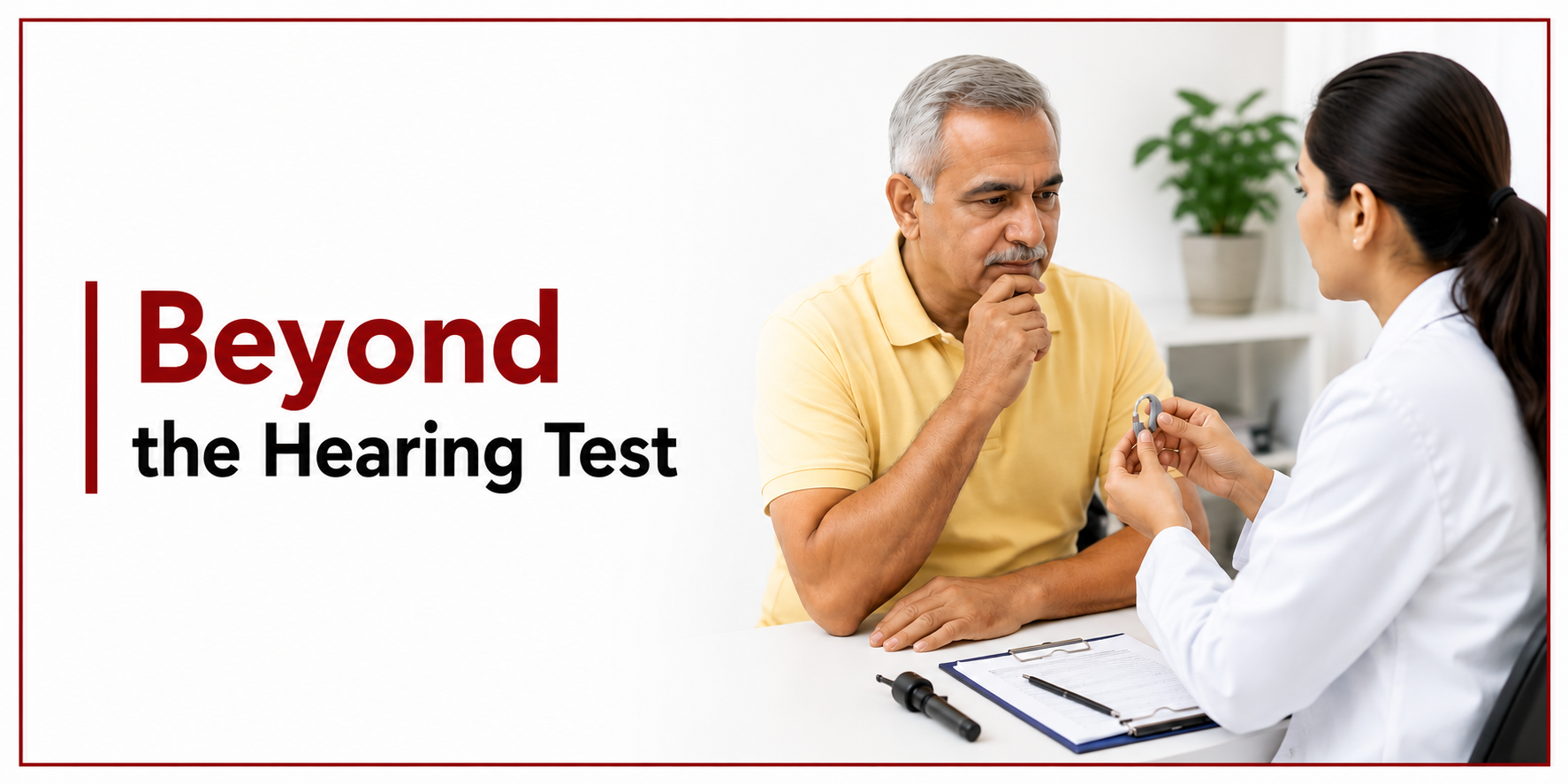
Knowing how to choose hearing aids goes beyond reading your audiogram results. A hearing test shows what sounds you can’t detect — but your lifestyle, ear anatomy, dexterity, and listening priorities are what determine which device will actually work for you.
Your audiogram shows which sounds you’re missing. That’s important. But it doesn’t tell you which hearing aid will help you follow a conversation in a crowded restaurant, manage long working days, or stay connected during family gatherings.
Understanding how to choose hearing aids properly means going beyond a single test result. The right device depends on who you are, how you live, and what you need most from your hearing. A number on a chart is just the starting point.
Key takeaways:
- A hearing test diagnoses the type and degree of hearing loss but doesn’t prescribe a device.
- Lifestyle, budget, ear shape, and manual dexterity all shape which hearing aid is right for you.
- Speech-in-noise testing and real-ear measurement give a fuller picture than tone detection alone.
- A personalised assessment from an audiologist is the most reliable route to the right fit.
Understanding the Role of a Hearing Test
A hearing test does one thing very well. It tells you the type and degree of your hearing loss across different sound frequencies.
That information is essential. It guides the amplification range a hearing aid needs to cover. Without it, no audiologist can begin to help you.
But a hearing test is diagnostic, not prescriptive. It identifies the problem. It doesn’t choose the solution. Deciding on the right device requires a great deal more information about the person wearing it.
Why Hearing Test Results Don’t Tell the Whole Story
Two people can have identical audiograms and need completely different hearing aids. One is a retired teacher who spends most of her time at home. The other is a project manager moving between noisy offices and client meetings all day.
Same hearing loss. Very different lives.
A standard hearing test also doesn’t measure how well you process speech in noisy environments. Speech-in-noise testing does that, and it often reveals challenges a basic audiogram misses entirely. Real-ear measurement adds another layer, verifying that a specific device delivers the right sound levels for your ear canal.
Knowing how to choose hearing aids means recognising what a hearing test can and can’t show you. Results from a tone test alone don’t capture the full picture.
Key Factors to Consider When Choosing Hearing Aids
Knowing how to choose hearing aids means looking at the full picture of your hearing needs, not just the audiogram. Key factors include:
- Lifestyle: how active you are and the environments you regularly spend time in.
- Budget: Hearing aids range significantly in price and technology tier.
- Ear anatomy: the size and shape of your ear canal affect which styles fit comfortably.
- Dexterity: Smaller aids require finer motor control for insertion and battery changes.
- Tinnitus: Some aids include tinnitus management features that others don’t.
- Connectivity: streaming from phones or TVs matters to some wearers and not at all to others
No single factor determines the right choice. It’s the combination that matters.
Different Types of Hearing Aids and Their Benefits
Hearing aids come in several styles, each suited to different needs and degrees of hearing loss:
- Behind-the-ear (BTE) hearing aid sits behind the ear with a tube connecting to an ear mould. Works across a wide range of loss types and is easy to handle.
- Receiver-in-canal (RIC/RITE) hearing aid slimmer, with the speaker sitting inside the ear canal itself. Discreet and comfortable for mild to moderate loss.
- In-the-ear (ITE) hearing aid custom-moulded to fill the outer ear. Easier to manage than smaller styles and suitable for a range of loss levels.
- Completely-in-canal (CIC) hearing aid nearly invisible when worn, but requires good dexterity. Best suited to mild loss
The style that looks most appealing may not be the right hearing aid solution for your specific ears and lifestyle. That’s why the choice needs to be guided by an assessment, not preference alone.
Why a Personalised Hearing Aid Assessment Matters
A personalised hearing aid assessment brings together everything a hearing test can’t provide. An audiologist examines your ear canal, discusses your daily routine, and evaluates how you process speech in different environments.
From there, a shortlist of suitable devices can be drawn up, trialled in real conditions, and verified. Real-ear measurement confirms that the fit is delivering the right output. Follow-up appointments fine-tune the programming.
This is how to choose hearing aids in a way that results in a device you’ll actually want to wear every day. At Quality Hearing Care, this process is the foundation of every fitting we carry out.
Common Mistakes People Make When Choosing Hearing Aids
These are the most common ways the decision goes wrong:
- Choosing based on price alone, without understanding what different technology tiers actually deliver.
- Buying online without any professional fitting or verification.
- Prioritising invisibility over function, resulting in a style that’s difficult to manage daily.
- Not trialling the aid in real listening environments before committing
- Skipping follow-up care, which is where much of the long-term benefit is actually achieved
Understanding how to choose hearing aids isn’t just about the initial purchase. It’s about the entire journey, from assessment through to ongoing support.
Conclusion
A hearing test tells you what you can’t hear. It doesn’t tell you what will help. Knowing how to choose hearing aids correctly means understanding that distinction.
Finding the right hearing aid solution takes a fuller picture. Your lifestyle, your ear, your priorities, and your budget all shape the answer. That’s why the assessment matters just as much as the audiogram. Request a Consultation with Quality Hearing Care. Take the next step toward hearing aids that genuinely work for your life.
FAQs
Can I Choose Hearing Aids Based Only on My Hearing Test Results?
Not reliably. Your audiogram guides which amplification range a device needs. But it doesn’t account for your lifestyle, ear anatomy, or listening priorities. Those factors shape the choice just as much as the degree of hearing loss.
How Do I Know Which Hearing Aid Style Is Best for Me?
The best style depends on your level of hearing loss, the size of your ear canal, and your manual dexterity. How you spend your days matters too. An audiologist can assess all of these during a fitting appointment and recommend the styles most likely to suit you.
Do All Hearing Aids Provide the Same Sound Quality?
No. Sound quality varies significantly across technology tiers and manufacturers. Higher-tier devices generally offer better performance in noisy environments and more natural sound processing. An audiologist can explain what each tier delivers and match it to what you actually need.
Related Post
-
 How Untreated Hearing Loss Can Affect Your Overall Health: It’s About More Than Just Your Ears
 -
 Ear Infection and Hearing Loss: What’s the Connection?
 -
 The Importance of Regular Hearing Check-Ups: Why Every Hearing Test Matters
 -
 Can Hearing Loss Be Reversed? What Patients Need to Know
 -
 Why Can I Hear Sounds But Not Understand Words? Understanding Hidden Hearing Loss
 -
 What's the Difference Between an Audiologist and an ENT?
 -
 6 Diseases That Cause Hearing Loss: Understanding the Connection
 -
 Why a Hearing Test Alone Is Not Enough Before Choosing Hearing Aids
 -
 How Do I Know If My Hearing Aids Are Adjusted Correctly?
 -
 Signia Hearing Aid Price in India (2026)
 -
 Understanding Communication Issues in Elderly Patients: The Distinction Between Hearing and Listening
 -
 Hearing Loss: Types, Symptoms, Causes & Treatment
 -
 Age-Related Hearing Loss (Presbycusis)
 -
 How to Safely and Properly Clean Your Ears- Methods & What to Avoid
 -
 Hearing Aids- Benefits, Different Styles/Types and How They Work
