
Hearing Resides In Your Brain Not Just Your Ears
Table of Contents
Introduction:
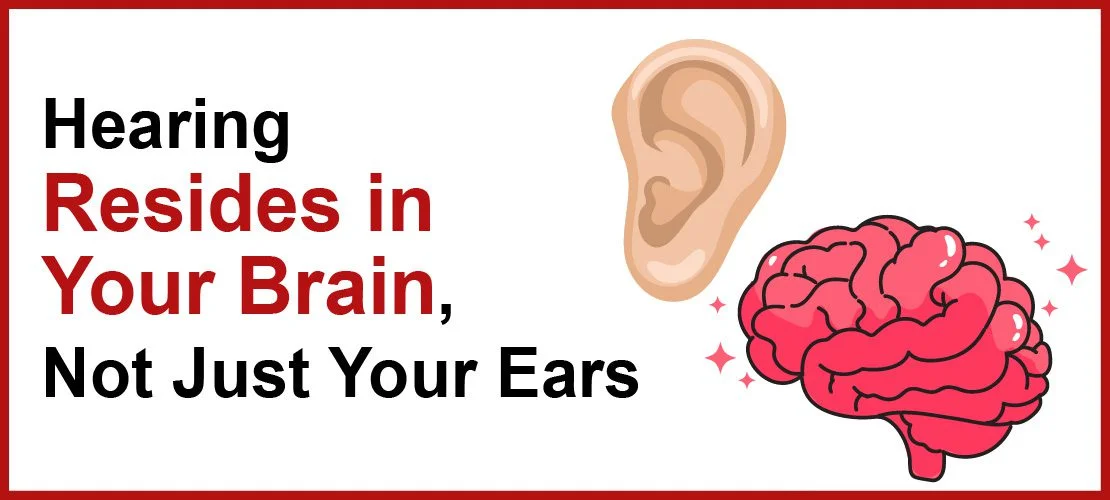
Hearing is not just about the ears; it’s a sophisticated cognitive process where the brain is the true hero. While our ears play a pivotal role in capturing sounds, understanding and interpreting these sounds is a task managed by the brain. This insight shifts the focus from a mechanical to a cognitive perspective on hearing.
The Ear-to-Brain Mechanics of the Hearing Process
The journey of sound from the ear to the brain is a marvel of nature’s design. The outer ear captures sound waves, funneling them to the middle ear, where they are transformed into mechanical vibrations. These vibrations are then converted into hydraulic energy in the inner ear, finally reaching the auditory nerve as electrical impulses. This conversion process is critical for the brain’s interpretation and understanding of sounds.
A Step-by-Step Exploration of the Hearing Process
- Sound Wave Capture: Sound waves enter the ear canal, reaching the eardrum.
- Vibration Transmission: The eardrum vibrates, passing these movements through the middle ear’s tiny bones.
- Cochlear Conversion: Vibrations reach the cochlea, where they are converted into fluid waves.
- Electrical Signal Generation: Hair cells in the cochlea translate these waves into electrical signals.
- Brain Processing: These signals are sent to the brain and interpreted as sounds.
This intricate process underscores the importance of each component working harmoniously to ensure clear hearing.
The Cognitive Nature of Hearing
Understanding sounds goes beyond just receiving audio signals; it involves a complex cognitive process of decoding and interpretation by the brain. This cognitive aspect becomes especially apparent when considering conditions like auditory processing disorders, where the brain struggles to process sounds correctly, leading to challenges in hearing and comprehension.
Continuous Operation: The Auditory System’s Never-Ending Shift
Our auditory system is in constant motion, processing sounds 24/7. Even during sleep, the brain continues to receive and filter sounds, prioritizing important noises and discarding irrelevant background noise. This relentless operation highlights the cognitive load involved in hearing and the brain’s capacity to manage this load efficiently.
Enhancing Hearing Health: Insights and Solutions
At Quality Hearing Care, we delve deep into the hearing process to offer personalized care and solutions. Understanding the cognitive basis of hearing allows us to address individual needs effectively, from managing hearing loss to treating conditions like Tinnitus.
Conclusion: The Hearing Process Revisited
The hearing process is a testament to the brain’s remarkable ability to interpret the world around us. By recognizing the cognitive elements of hearing, we can adopt a more holistic approach to hearing health, ensuring a better quality of life for those affected by hearing challenges.
FAQs
Sound waves enter the ear canal and cause the eardrum to vibrate. These vibrations pass through the tiny bones of the middle ear to the cochlea, where hair cells convert them into electrical signals. The auditory nerve then carries these signals to the brain, where they are interpreted as sounds.
The cochlea is a key part of the inner ear that converts mechanical vibrations into electrical signals. Hair cells inside the cochlea respond to fluid movement caused by sound vibrations and help transmit information to the brain through the auditory nerve.
The brain receives electrical signals from the auditory nerve and processes them to recognise and interpret sounds. Hearing therefore involves more than simply detecting sound; the brain plays an important role in understanding and making sense of what we hear.
A person may experience difficulty understanding or interpreting sounds even when sound signals reach the auditory system. Conditions such as auditory processing disorders can affect how the brain processes sounds, potentially making it harder to understand speech or distinguish sounds.
Choosing the right hearing aid is not just about the brand, price, or number of features. It should be based on your type and degree of hearing loss, how well you understand speech, your daily listening situations, comfort, handling needs, and budget. A detailed hearing evaluation helps the audiologist recommend a hearing aid that is best suited to your individual needs and communication difficulties.
Related Post
-
 How Untreated Hearing Loss Can Affect Your Overall Health: It’s About More Than Just Your Ears
 -
 Ear Infection and Hearing Loss: What’s the Connection?
 -
 The Importance of Regular Hearing Check-Ups: Why Every Hearing Test Matters
 -
 Can Hearing Loss Be Reversed? What Patients Need to Know
 -
 Why Can I Hear Sounds But Not Understand Words? Understanding Hidden Hearing Loss
 -
 What's the Difference Between an Audiologist and an ENT?
 -
 6 Diseases That Cause Hearing Loss: Understanding the Connection
 -
 Why a Hearing Test Alone Is Not Enough Before Choosing Hearing Aids
 -
 How Do I Know If My Hearing Aids Are Adjusted Correctly?
 -
 Signia Hearing Aid Price in India (2026)
 -
 Understanding Communication Issues in Elderly Patients: The Distinction Between Hearing and Listening
 -
 Hearing Loss: Types, Symptoms, Causes & Treatment
 -
 Age-Related Hearing Loss (Presbycusis)
 -
 How to Safely and Properly Clean Your Ears- Methods & What to Avoid
 -
 Hearing Aids- Benefits, Different Styles/Types and How They Work
Far far away, behind the word mountains, far from the countries Vokalia and Consonantia, there live the blind texts. Separated they live in Bookmarksgrove right at the coast
Far far away, behind the word mountains, far from the countries Vokalia and Consonantia, there live the blind texts. Separated they live in Bookmarksgrove right at the coast
Far far away, behind the word mountains, far from the countries Vokalia and Consonantia, there live the blind texts. Separated they live in Bookmarksgrove right at the coast
