
Ear Infection and Hearing Loss: What’s the Connection?
- Reviewed By: Dr. Prabha
- Published:
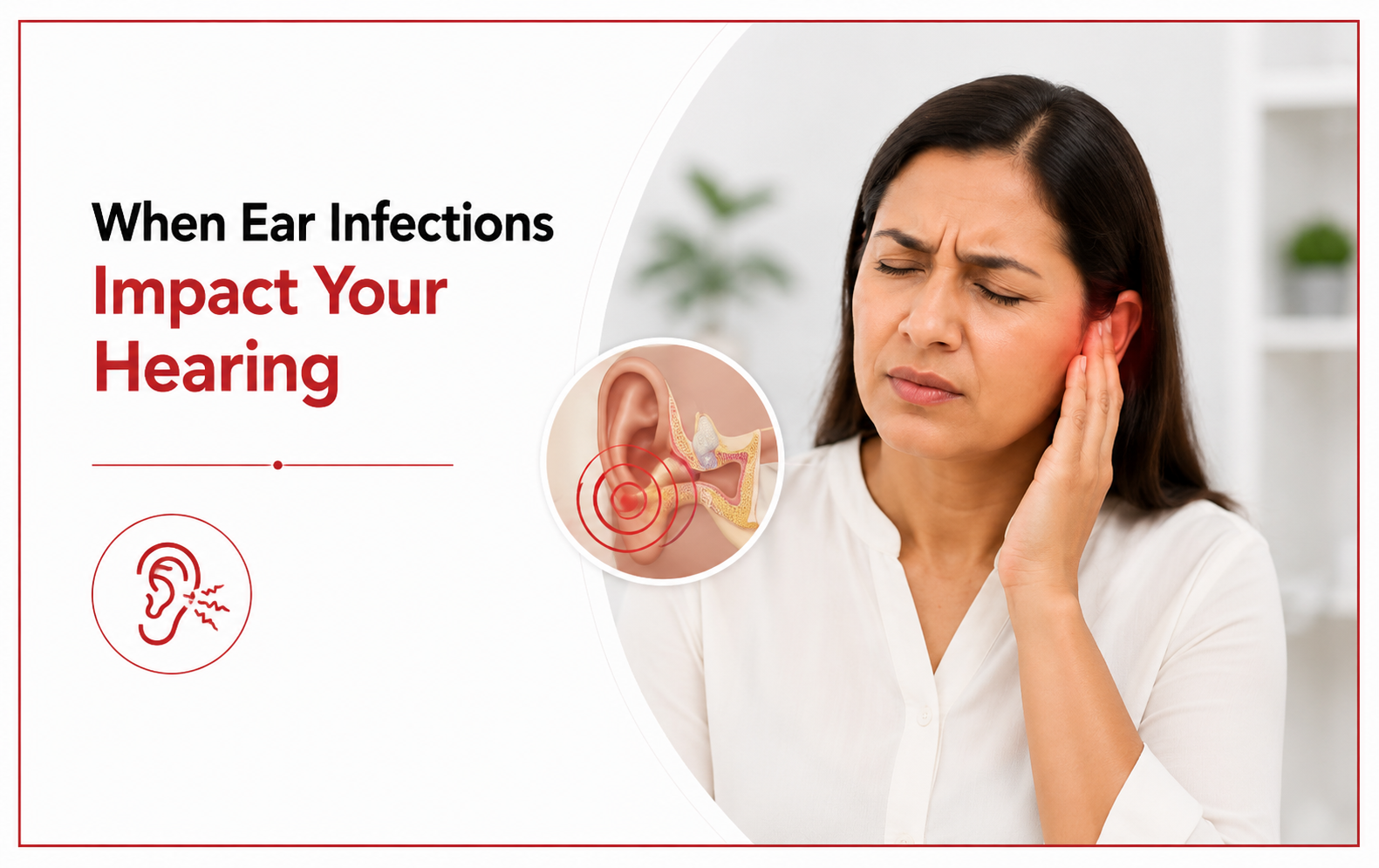
Key takeaways:
- Middle ear infections are the most frequent cause and usually resolve within weeks.
- Inner ear infections (labyrinthitis) carry the highest risk of permanent hearing damage.
- Most cases are conductive, meaning fluid or inflammation blocks sound rather than damaging nerves.
- Prompt treatment significantly lowers the risk of lasting hearing loss.
Introduction
How Ear Infections Affect Hearing
Types of Ear Infections That Can Impact Hearing
Type of Ear Infection | Impact on Hearing and Recovery |
Outer Ear Infection (Otitis Externa) | Swelling in the ear canal can temporarily block sound, causing mild or muffled hearing. Hearing usually returns to normal once the infection is treated and the swelling subsides. |
Middle Ear Infection (Otitis Media) | Fluid buildup behind the eardrum reduces sound transmission, leading to temporary hearing loss. Most cases improve after the infection resolves and the fluid drains, although persistent fluid may require further treatment. |
Inner Ear Infection (Labyrinthitis) | Inflammation can affect the inner ear’s hearing structures, potentially causing hearing loss and dizziness. This type carries the highest risk of permanent hearing loss, making early diagnosis and treatment essential. |
Symptoms of Ear Infection-Related Hearing Loss
Is Hearing Loss from an Ear Infection Temporary or Permanent?
Temporary Hearing Loss
- Muffled or reduced hearing
- A sensation of pressure or fullness in the ear
- Mild popping or crackling sounds as fluid drains
- Temporary difficulty understanding speech, particularly in noisy environments
Permanent Hearing Loss
- Sudden or severe hearing loss
- Hearing that does not improve after the infection has resolved
- Persistent ear discharge lasting more than a few days
- Severe dizziness or balance problems
- Intense ear pain accompanied by fever
How is an ear infection diagnosed as hearing loss?
Hearing Tests
Ear Examination and Imaging
Treatment Options for Ear Infection Hearing Loss
Medications
Surgical Treatments
Hearing Rehabilitation
When Should You See an Audiologist or ENT Specialist?
Tips to Prevent Ear Infections and Protect Your Hearing
- Keep your ears dry after swimming or bathing, especially if you’re prone to infections.
- Treat colds and sinus infections promptly, since they often spread to the ear.
- Avoid inserting cotton buds or objects into the ear canal.
- Don’t smoke, and limit exposure to secondhand smoke where possible.
- Finish prescribed antibiotics fully, even once symptoms improve.
FAQs
Can an ear infection permanently damage hearing?
How long does hearing loss last after an ear infection?
Can adults get hearing loss from ear infections?
When should I seek medical attention for an ear infection?
Can diabetes or high blood pressure affect hearing?
Yes, both can damage the small blood vessels and nerves that support healthy hearing over time.
Related Post
-
 How Untreated Hearing Loss Can Affect Your Overall Health: It’s About More Than Just Your Ears
 -
 Ear Infection and Hearing Loss: What’s the Connection?
 -
 The Importance of Regular Hearing Check-Ups: Why Every Hearing Test Matters
 -
 Can Hearing Loss Be Reversed? What Patients Need to Know
 -
 Why Can I Hear Sounds But Not Understand Words? Understanding Hidden Hearing Loss
 -
 What's the Difference Between an Audiologist and an ENT?
 -
 6 Diseases That Cause Hearing Loss: Understanding the Connection
 -
 Why a Hearing Test Alone Is Not Enough Before Choosing Hearing Aids
 -
 How Do I Know If My Hearing Aids Are Adjusted Correctly?
 -
 Signia Hearing Aid Price in India (2026)
 -
 Understanding Communication Issues in Elderly Patients: The Distinction Between Hearing and Listening
 -
 Hearing Loss: Types, Symptoms, Causes & Treatment
 -
 Age-Related Hearing Loss (Presbycusis)
 -
 How to Safely and Properly Clean Your Ears- Methods & What to Avoid
 -
 Hearing Aids- Benefits, Different Styles/Types and How They Work
