
How Untreated Hearing Loss Can Affect Your Overall Health: It’s About More Than Just Your Ears
- Reviewed By: Dr. Prabha
- Published:

Key takeaways:
- People with untreated hearing loss are more likely to withdraw from social situations.
- Some research links hearing loss to a higher risk of dementia and cognitive decline.
- Straining to hear is mentally exhausting and can affect mood over time.
- Treating hearing loss early is linked to better long-term well-being.
Introduction
Why Hearing Loss Is Often Overlooked
How Hearing Loss Affects Your Brain
The Hidden Stress of Hearing Loss
Hearing Loss, Cognitive Decline, and Dementia
Does Hearing Loss Increase the Risk of Falls?
Social Isolation: The Problem Few People Notice
Why Early Treatment Makes a Difference
Final Thoughts
FAQs
How does hearing loss affect quality of life?
It affects far more than communication. The impact of hearing loss on quality of life includes higher rates of social isolation and mental fatigue. It also raises the risk of cognitive decline, and can affect relationships, confidence, and physical safety over time.
Can untreated hearing loss lead to dementia?
Research has found a link between untreated hearing loss and higher dementia risk. It’s not fully understood as a direct cause, though. Early treatment is thought to help reduce that added risk.
Does hearing loss affect mental health?
Yes. The effort of straining to hear, combined with social withdrawal, is linked to higher rates of anxiety and depression. This is especially true in people who leave hearing loss untreated for years.
Can treating hearing loss improve overall well-being?
Yes, for most people. Better hearing supports easier conversations, more social connection, and less daily mental strain. Together, these all support better overall well-being, not just clearer sound.
Related Post
-
 How Untreated Hearing Loss Can Affect Your Overall Health: It’s About More Than Just Your Ears
 -
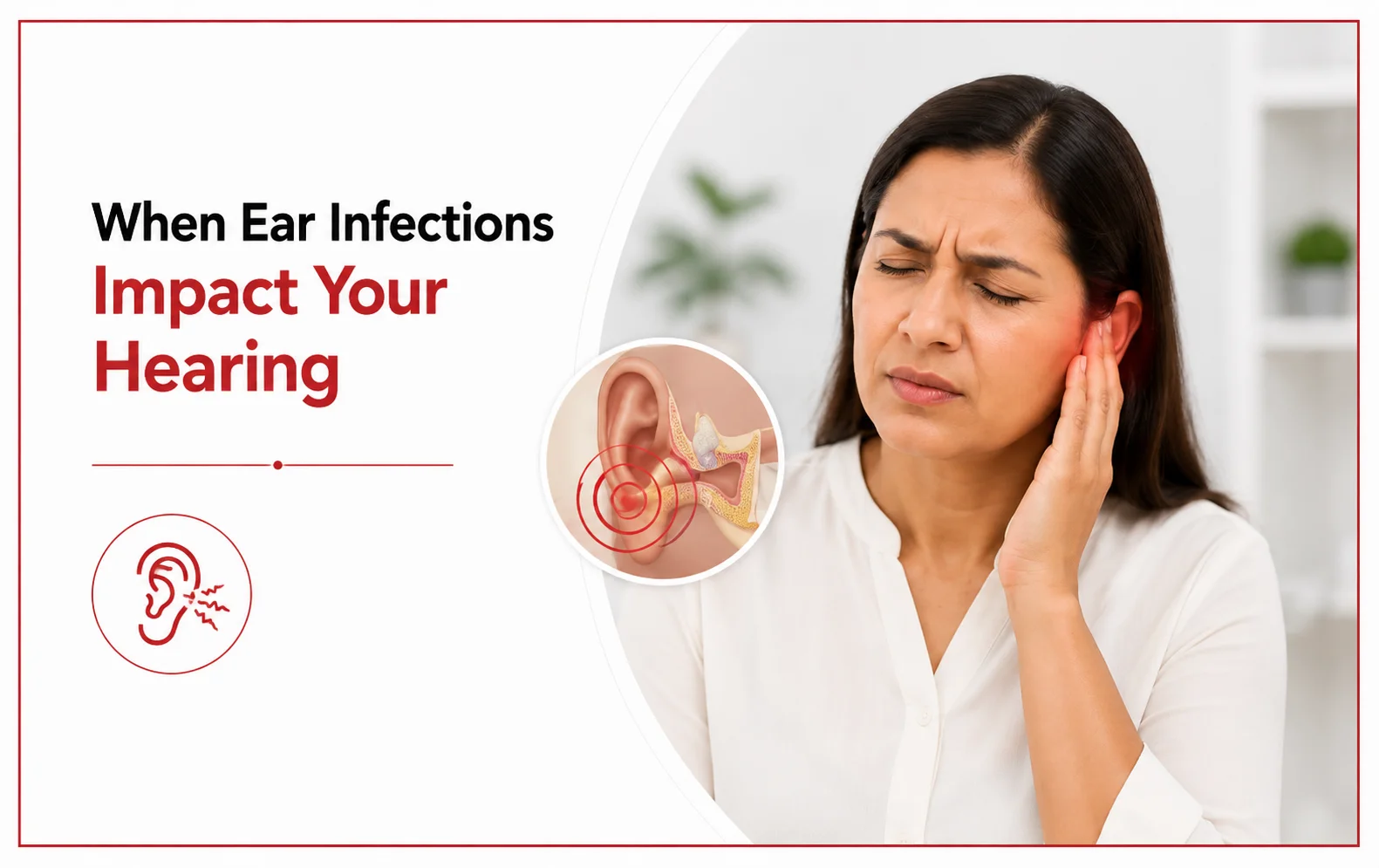 Ear Infection and Hearing Loss: What’s the Connection?
 -
 The Importance of Regular Hearing Check-Ups: Why Every Hearing Test Matters
 -
 Can Hearing Loss Be Reversed? What Patients Need to Know
 -
 Why Can I Hear Sounds But Not Understand Words? Understanding Hidden Hearing Loss
 -
 What's the Difference Between an Audiologist and an ENT?
 -
 6 Diseases That Cause Hearing Loss: Understanding the Connection
 -
 Why a Hearing Test Alone Is Not Enough Before Choosing Hearing Aids
 -
 How Do I Know If My Hearing Aids Are Adjusted Correctly?
 -
 Signia Hearing Aid Price in India (2026)
 -
 Understanding Communication Issues in Elderly Patients: The Distinction Between Hearing and Listening
 -
 Hearing Loss: Types, Symptoms, Causes & Treatment
 -
 Age-Related Hearing Loss (Presbycusis)
 -
 How to Safely and Properly Clean Your Ears- Methods & What to Avoid
 -
 Hearing Aids- Benefits, Different Styles/Types and How They Work
