
Why Can I Hear Sounds But Not Understand Words? Understanding Hidden Hearing Loss
- Reviewed By: Dr. Prabha
- Published:
Table of Contents
Key takeaways:
- It can exist even when a standard hearing test results are completely normal.
- Noise exposure, ageing, and certain medications are common triggers.
- A specialist speech-in-noise test can catch what a standard hearing test misses.
- Quality Hearing Care’s diagnostic process goes beyond the basic audiogram to find the real cause.
Introduction
You ask someone to repeat themselves for the third time this week. Again. The room isn’t noisy, and your last hearing test was “normal.” So why does every conversation feel like static?
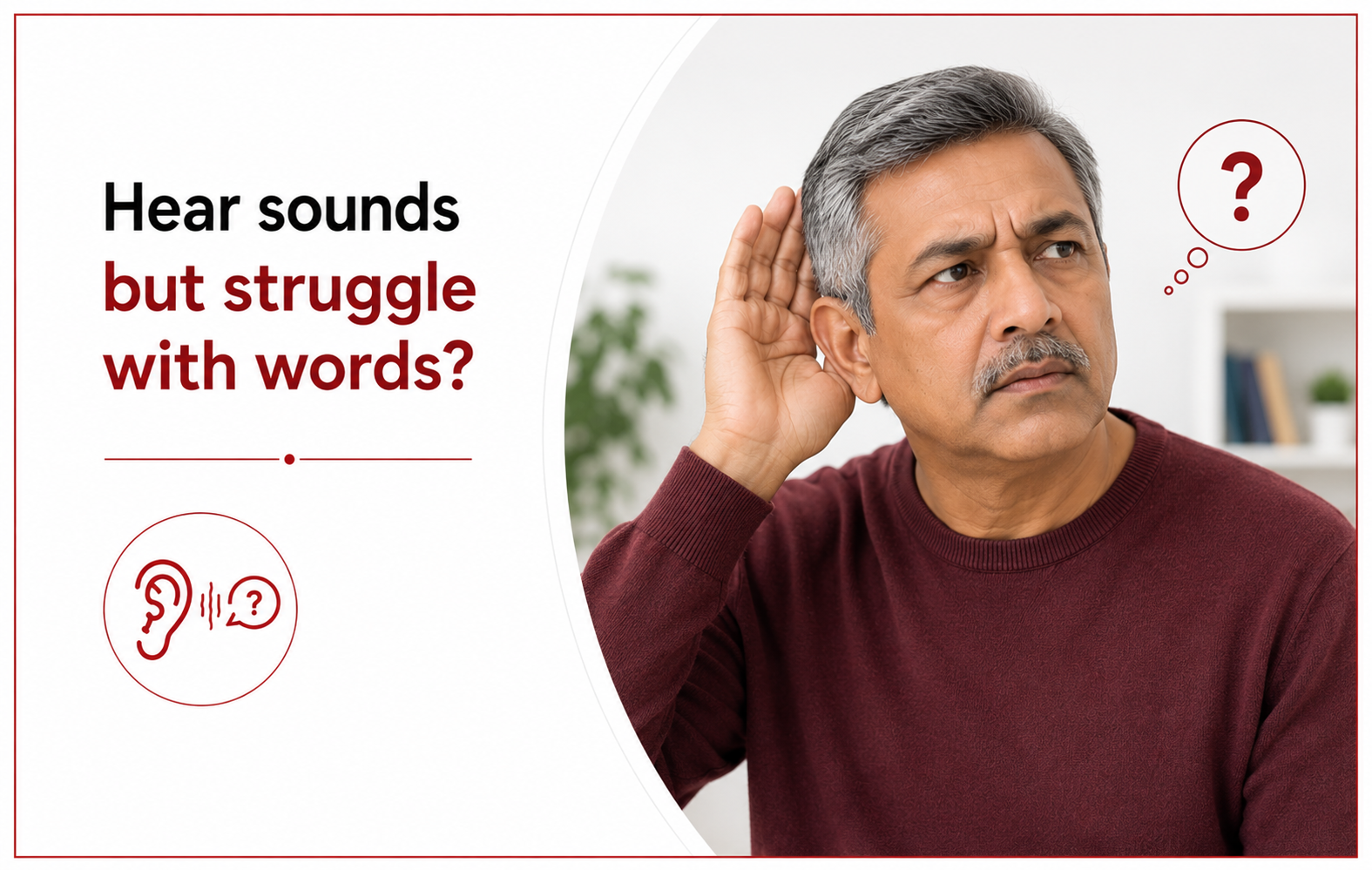
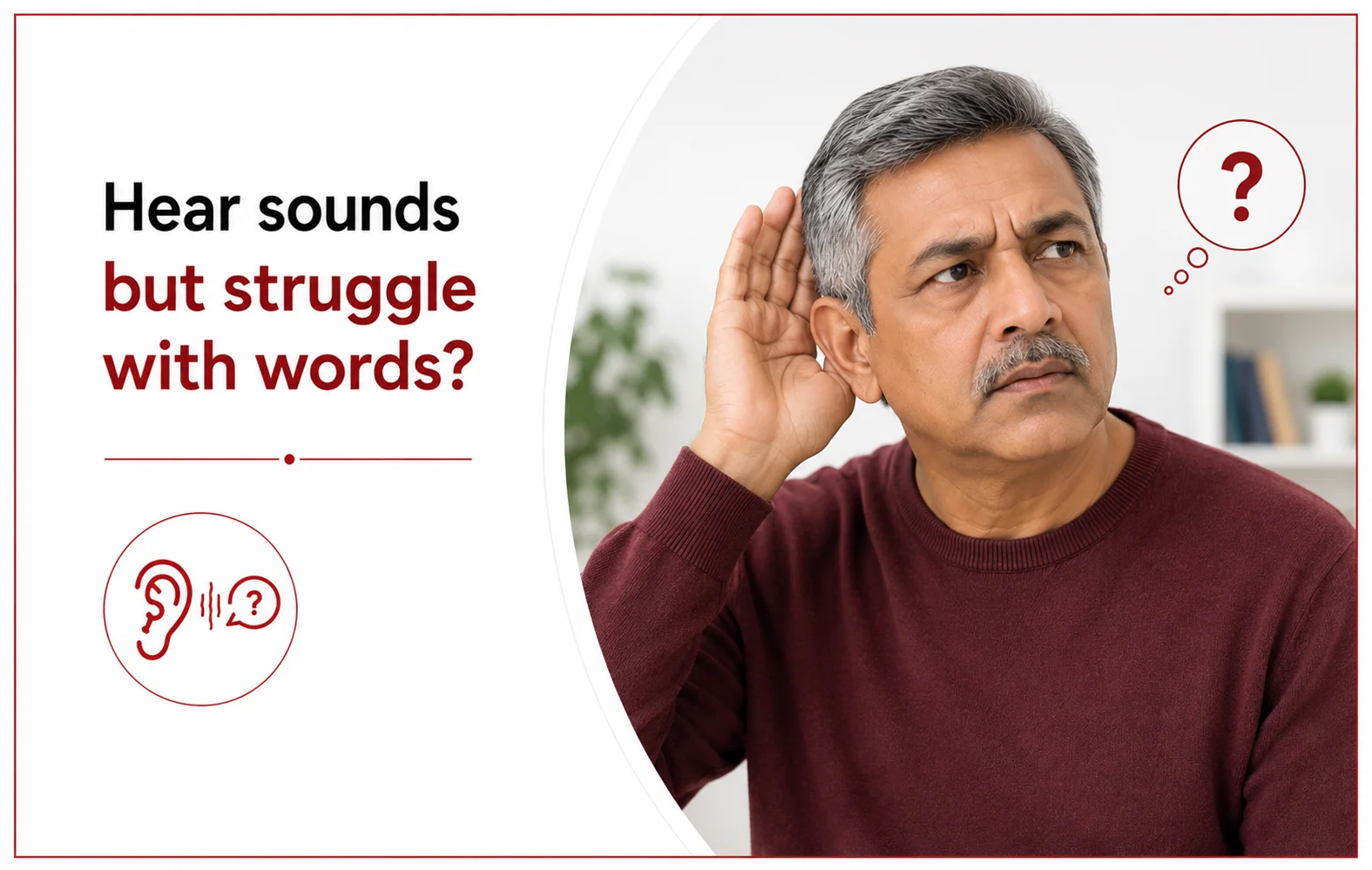
This is one of the most confusing experiences in audiology. You hear sounds clearly, but the words don’t come together, especially in a busy café or at a family dinner. It has a name: hidden hearing loss, a form of auditory damage that standard tests often miss entirely.
If this sounds familiar, you’re not imagining it. And you’re not alone. This article walks through what’s actually happening in your ears and brain. It also covers why a typical test misses it, and what you can do next.
What Is Hidden Hearing Loss?
It’s a type of inner ear damage that doesn’t show up on a standard hearing test. Even so, it affects how well you understand speech. Audiologists sometimes call it cochlear synaptopathy. That’s a mouthful for a simple idea: the nerve connections between your inner ear and brain have been damaged.
Your audiogram, the graph from a standard hearing test, measures whether you can hear pure tones at different pitches. It doesn’t measure how well your brain processes fast, overlapping speech sounds. That’s the gap this condition falls into.
Research from Charles Liberman at Harvard Medical School first identified this damage back in 2015. His team found that noise exposure can destroy the synapses linking hair cells to the auditory nerve. This happens long before your hearing thresholds actually change.
Common Signs and Symptoms of Hidden Hearing Loss
Most people with this condition describe the same frustrating pattern: hearing exists, but clarity doesn’t. The most common signs include:
- Difficulty understanding speech in restaurants, parties, or other noisy places.
- Needing the television or radio louder than everyone else.
- Asking people to repeat themselves, even in quiet rooms.
- Feeling exhausted after conversations, from straining to follow along.
- A “normal” result on a standard hearing test despite these struggles.
These symptoms often build slowly. Many people adapt without realising it, relying more on lip reading or context clues than they used to.
What Causes Hidden Hearing Loss?
It usually comes down to damage in the structures that carry sound signals from ear to brain. Three factors show up again and again.
1. Noise Exposure
Loud noise is the biggest culprit. Concerts, power tools, headphones turned up too high: all of it adds up over time. Even a single very loud event, like a fireworks display up close, can cause damage. Health bodies such as the NIDCD note sounds above 85 decibels over time can damage hearing. The damage doesn’t always show up immediately. Symptoms can take years to become noticeable.
2. Aging
As we get older, the nerve connections in the inner ear naturally start to wear down. This is separate from the more familiar age-related hearing loss that shows up on a standard test. Some researchers believe this kind of damage may be an early warning sign of auditory ageing. It can appear well before other symptoms show up.
3. Medical Conditions and Medications
Certain medications, particularly some chemotherapy drugs and high doses of aspirin, can affect the auditory nerve. Diabetes and cardiovascular conditions have also been linked to inner ear nerve damage. If you’re on long-term medication and have noticed changes in your conversations, mention it to your doctor. An audiologist can help too.
How Is Hidden Hearing Loss Diagnosed?
Diagnosing it takes more than a standard hearing test. Because your audiogram often looks completely normal, audiologists need specialised tools to see the full picture.
A hidden hearing loss test usually starts with checking how well you follow speech against background noise. That’s different from the pure-tone check in a standard hearing test, and it’s exactly where the real effects show up. Some clinics also use electrocochleography or auditory brainstem response testing. These measure how your nerves respond to sound in far more detail.
At Quality Hearing Care, assessment goes beyond a basic hearing check. Our audiologists look at how you actually process speech day to day. Not just whether you can detect a beep in a quiet booth.
Treatment Options for Hidden Hearing Loss
There’s no single fix for it, but several approaches can genuinely help:
- Advanced hearing aids with directional microphones and noise reduction, which can help isolate speech from background sound.
- Auditory training programmes that help your brain relearn how to process speech in difficult listening conditions.
- Assistive listening devices, such as remote microphones, are available for specific high-noise situations like meetings or restaurants.
- Communication strategies, like positioning yourself to see a speaker’s face, can reduce the strain of listening.
Every case is different. What works for one person might not suit another. That’s why personalised fitting and verification matter so much.
When Should You See an Audiologist?
See an audiologist if conversations in noisy places have started to feel like hard work. This applies even when your last hearing test within normal limits.within normal limits. Make sure you consult only with the Audiologist or Hearing Science Specialist and NOT ENT Surgeon. Early assessment means more options. It also means you can address the strain before it affects your confidence at work or with family.
Book Your Hearing Assessment if any of this sounds familiar. It’s a straightforward first step, not a commitment to anything more.
FAQs
Can you have hidden hearing loss with a normal hearing test?
Yes. That’s exactly what makes it so difficult to catch. A standard audiogram measures whether you can hear specific tones, not how well you process speech in noise. You can pass a hearing test completely and still struggle in a crowded room.
Is hidden hearing loss permanent?
Often, yes, since the underlying nerve damage doesn’t reverse on its own. But the day-to-day impact can improve significantly with the right support. That includes advanced hearing aids, auditory training, and communication strategies.
Can hidden hearing loss be prevented?
Partly. Protecting your ears from loud noise helps a lot. Earplugs at concerts and recovery time after loud events both reduce your risk. Regular check-ups also help catch changes early, before they affect your daily life.
Related Post
-
 How Untreated Hearing Loss Can Affect Your Overall Health: It’s About More Than Just Your Ears
 -
 Ear Infection and Hearing Loss: What’s the Connection?
 -
 The Importance of Regular Hearing Check-Ups: Why Every Hearing Test Matters
 -
 Can Hearing Loss Be Reversed? What Patients Need to Know
 -
 Why Can I Hear Sounds But Not Understand Words? Understanding Hidden Hearing Loss
 -
 What's the Difference Between an Audiologist and an ENT?
 -
 6 Diseases That Cause Hearing Loss: Understanding the Connection
 -
 Why a Hearing Test Alone Is Not Enough Before Choosing Hearing Aids
 -
 How Do I Know If My Hearing Aids Are Adjusted Correctly?
 -
 Signia Hearing Aid Price in India (2026)
 -
 Understanding Communication Issues in Elderly Patients: The Distinction Between Hearing and Listening
 -
 Hearing Loss: Types, Symptoms, Causes & Treatment
 -
 Age-Related Hearing Loss (Presbycusis)
 -
 How to Safely and Properly Clean Your Ears- Methods & What to Avoid
 -
 Hearing Aids- Benefits, Different Styles/Types and How They Work
