
6 Diseases That Cause Hearing Loss: Understanding the Connection
Table of Contents
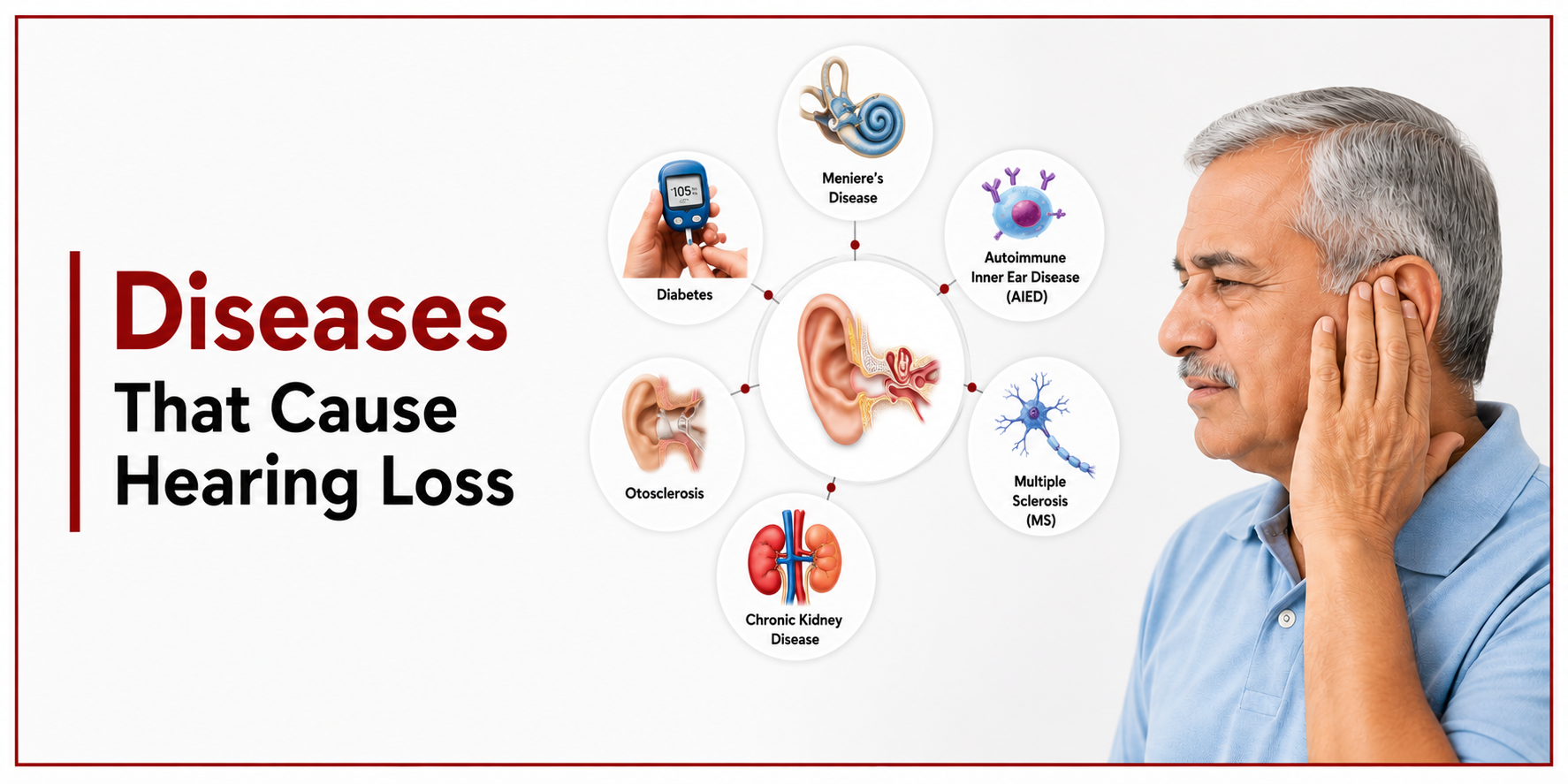
Several systemic diseases that cause hearing loss do so by damaging the cochlea, auditory nerve, or blood supply to the inner ear. Meniere’s disease, diabetes, and autoimmune conditions are among the most commonly linked.
Hearing loss isn’t always caused by noise exposure or ageing. Sometimes it’s the body signalling something deeper. Several systemic medical conditions directly affect the ear, damaging structures that are essential for sound processing.
Understanding the diseases that cause hearing loss matters. It helps people join the dots between an existing diagnosis and a change in their hearing. And it can lead to earlier, more appropriate care.
Key takeaways:
- Diseases can cause sensorineural, conductive, or mixed hearing loss, depending on how they affect the ear
- Diabetes is consistently linked to a doubled risk of hearing loss by damaging cochlear blood vessels
- Autoimmune Inner Ear Disease (AIED) can progress rapidly and responds best to early treatment
- Sudden or unexplained hearing changes alongside a known medical condition warrant prompt specialist review
How Diseases Can Lead to Hearing Loss
The ear is a delicate system. Disease can disrupt it in several ways. It may damage the fine hair cells inside the cochlea, reduce blood supply to the inner ear, or cause inflammation. It can also interfere with the auditory nerve pathway that carries signals to the brain.
Some diseases cause sensorineural hearing loss, which involves the inner ear or nerve. Others cause conductive hearing loss, which affects how sound travels through the ear. Some cause both. Knowing which type is involved helps guide treatment.
1. Meniere’s Disease
Meniere’s disease involves a build-up of fluid (endolymph) in the inner ear. This excess pressure disrupts normal hearing and balance function.
Episodes typically bring vertigo, a feeling of fullness in the ear, tinnitus, and fluctuating hearing loss. Over time, the hearing loss can become permanent, particularly in the lower frequencies.
The cause of Meniere’s disease isn’t fully understood. But early management with a specialist can help slow progression and reduce the frequency of episodes.
2. Diabetes
Diabetes is among the diseases that cause hearing loss most frequently. Research consistently links diabetes to a roughly doubled risk of hearing loss compared with those without the condition.
High blood sugar damages the small blood vessels and nerves that supply the cochlea. Without adequate blood flow, the delicate hair cells responsible for converting sound into nerve signals gradually deteriorate. Both type 1 and type 2 diabetes carry this risk.
3. Autoimmune Inner Ear Disease (AIED)
In Autoimmune Inner Ear Disease, the immune system mistakenly attacks the inner ear’s own tissues. The result is progressive sensorineural hearing loss, often affecting both ears.
AIED can develop rapidly. Hearing loss may worsen over weeks or months rather than years. The condition is treated with corticosteroids and, in some cases, immunosuppressant medication. Early diagnosis significantly improves the chances of preserving useful hearing.
4. Otosclerosis
Otosclerosis causes abnormal bone growth around the stapes. This is one of the tiny bones in the middle ear responsible for conducting sound. As the bone stiffens and movement reduces, sound conduction is impaired.
The result is typically conductive hearing loss that worsens gradually over time. Otosclerosis is more common in women and often becomes noticeable in early adulthood. It can be treated surgically or managed with hearing aids, depending on the degree of loss.
5. Multiple Sclerosis (MS)
Multiple Sclerosis affects the central nervous system through demyelination. This is the deterioration of the protective sheath surrounding nerve fibres. When this process affects the auditory nerve pathway, it can disrupt signals travelling from the ear to the brain.
Hearing loss in MS is less common than other symptoms but well-documented. It may appear suddenly and can fluctuate. Anyone with an MS diagnosis who notices hearing changes should flag this to their neurologist and to an audiologist.
6. Chronic Kidney Disease
The inner ear and the kidneys share remarkably similar structural features. Both rely on specialised cells to regulate fluid and ion balance. When kidney function fails, the toxins that accumulate can damage these shared cellular structures in the cochlea.
Certain medications used to manage kidney disease are also ototoxic, meaning they carry a known risk of hearing damage. People living with chronic kidney disease should have their hearing monitored as part of their broader health care.
Other Medical Conditions That May Cause Hearing Loss
This isn’t an exhaustive list of diseases that cause hearing loss. Other conditions worth being aware of include:
- Cardiovascular disease: reduced blood flow to the cochlea can accelerate hearing deterioration.
- Meningitis: Bacterial meningitis, in particular, can cause rapid damage to cochlear hair cells.
- Lupus (SLE): Inflammation and certain medications used in treatment can affect hearing.
- Paget’s disease of bone: It can alter the bones of the skull and middle ear.
Any systemic illness involving inflammation, blood flow, or nerve function has the potential to affect hearing.
Can Disease-Related Hearing Loss Be Prevented?
Not always, but early action makes a significant difference. Managing the underlying condition well can reduce the risk of hearing complications. Keeping blood sugar stable in diabetes or treating autoimmune activity promptly are clear examples of this.
Regular hearing monitoring is particularly valuable for anyone with one of the diseases that cause hearing loss. Catching changes early opens up more treatment options and helps prevent further deterioration.
When Should You See a Hearing Specialist?
See a hearing specialist promptly if:
- You notice a sudden or rapid change in your hearing alongside a known medical condition.
- You experience tinnitus, vertigo, or ear fullness that doesn’t resolve.
- Your hearing seems to fluctuate from day to day.
- You’re taking medication known to carry ototoxic risk
Don’t wait for hearing loss to become severe before seeking an assessment. An earlier review means more options.
Conclusion
The connection between illness and hearing is more direct than most people realise. Diseases that cause hearing loss often do so quietly, making regular monitoring essential for anyone managing a relevant medical condition.
Book Your Hearing Assessment with Quality Hearing Care. Whether you’ve noticed changes or simply want to understand your baseline, our audiologists take a thorough, whole-person approach to understanding what’s affecting your hearing and why.
FAQs
Can Treating the Underlying Disease Restore Hearing?
It depends on the condition and how quickly treatment begins. In Autoimmune Inner Ear Disease, early steroid treatment can halt or partially reverse hearing loss. In Meniere’s disease or diabetes, managing the illness can slow progression. But it may not restore what’s already been lost.
Which Disease Is Most Commonly Linked to Hearing Loss?
Diabetes has the strongest and most widely researched link. The combination of vascular damage and nerve involvement makes it a significant risk factor. The risk is highest when blood sugar control has been poor over many years.
Can Hearing Loss Be the First Sign of a Medical Condition?
Yes. In some cases, hearing loss or tinnitus appears before a formal diagnosis has been made. AIED, Meniere’s disease, and cardiovascular conditions can all present with hearing symptoms early. A thorough hearing assessment that includes a full health history can help identify patterns worth investigating further.
Related Post
-
 How Untreated Hearing Loss Can Affect Your Overall Health: It’s About More Than Just Your Ears
 -
 Ear Infection and Hearing Loss: What’s the Connection?
 -
 The Importance of Regular Hearing Check-Ups: Why Every Hearing Test Matters
 -
 Can Hearing Loss Be Reversed? What Patients Need to Know
 -
 Why Can I Hear Sounds But Not Understand Words? Understanding Hidden Hearing Loss
 -
 What's the Difference Between an Audiologist and an ENT?
 -
 6 Diseases That Cause Hearing Loss: Understanding the Connection
 -
 Why a Hearing Test Alone Is Not Enough Before Choosing Hearing Aids
 -
 How Do I Know If My Hearing Aids Are Adjusted Correctly?
 -
 Signia Hearing Aid Price in India (2026)
 -
 Understanding Communication Issues in Elderly Patients: The Distinction Between Hearing and Listening
 -
 Hearing Loss: Types, Symptoms, Causes & Treatment
 -
 Age-Related Hearing Loss (Presbycusis)
 -
 How to Safely and Properly Clean Your Ears- Methods & What to Avoid
 -
 Hearing Aids- Benefits, Different Styles/Types and How They Work
